

Remember back in the late nineties when tech gurus promised us that by now we would all be living in a sleek, paperless utopia? We were told that physical paper would follow the cassette tape and the VHS player into the dusty annals of history.
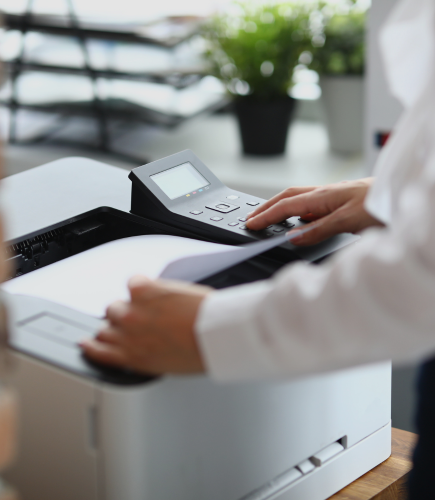
Well, look around your workspace right now. See that printer sitting there, ready to pump out today’s invoices, site plans, and shipping labels? It turns out reports of the death of printing have been greatly exaggerated.
Despite every prediction that digital screens would completely kill off the physical document, printing is not just surviving. It is thriving. The reality is that the paperless office turned out to be a total myth, and physical media remains as essential to modern work and daily life as a good cup of coffee.
Let us unpack why the rumors about printing dying are flat out wrong, and why print media still holds a special place in our high-tech world.
Myth 1: Everything is digital now, so no one needs paper
It sounds convincing on paper (pun intended). We have tablets, smartphones, cloud storage, and dual monitor setups. Why would anyone need to print a hard copy?
Because human brains are wired for physical touch. Study after study in cognitive science shows that people comprehend and retain complex information much better when reading from physical paper compared to glowing screens. When you read a document on a screen, your eyes tend to skim, skip lines, and get distracted by incoming notifications, Slack messages, or emails.
When you hold a printed document, your brain engages tactile memory. You can flip pages, underline key sections, and absorb information without eye strain. That is precisely why lawyers, accountants, engineers, and teachers still print critical reports. When a document truly matters, people print it.
Myth 2: Printing is terrible for the environment
This is one of the biggest misconceptions out there. Many people assume that printing a document equates to destroying a forest.
The truth is that the modern paper and print industry is one of the most sustainable and heavily regulated sectors in the world. Paper used in Australia is generally sourced from sustainable, commercially managed forestry plantations where trees are specifically grown, harvested, and replanted in continuous cycles.
On top of that, eco-friendly printing tech has come leaps and bounds. Remanufacturing and recycling printer cartridges keeps tons of plastic out of landfills every single year. When you use energy-efficient printers, recycled paper, and sustainable ink cartridges, your office print footprint is remarkably low.
Compare that to the digital world. The vast server farms running cloud storage, data centers, and digital infrastructure require massive amounts of continuous electricity and cooling. Digital content is far from invisible when it comes to carbon impact.
Myth 3: Print media lacks impact in a modern marketing strategy
We live in an era of digital fatigue. The average person is bombarded with thousands of digital ads, pop-ups, promotional emails, and social media posts every single day. The result? We have learned to tune them out completely. Our eyes automatically look for the skip ad button or swipe straight past sponsored posts.
Print media cuts through all that noise.
A well-crafted flyer, a physical brochure, or a crisp printed letter delivers a level of authority that an email simply cannot match. Physical print creates a tangible connection. When a customer holds a printed brand message in their hands, it feels real, official, and trustworthy. It stays on the kitchen bench or office desk for days, acting as a constant reminder, whereas a marketing email gets deleted in less than two seconds.
For local businesses, local print marketing continues to drive massive ROI because it sits directly in the physical space of the target audience.
Myth 4: Digital signatures mean paper forms are dead
Digital signatures are convenient, no doubt about it. But step into any medical clinic, construction site, warehouse, school, or legal firm and you will see paper contracts, safety checklists, and consent forms everywhere.
Why? Because physical paper does not run out of battery, lose Wi-Fi connection, or crash right when you need to sign on the dotted line. On a busy job site, a printed floor plan or safety sheet can be thrown on the hood of a ute, drawn on with a sharpie, and handed between workers in seconds flat. Try doing that with an expensive iPad during a dusty hot summer.
Printed documents provide reliability when technology plays up. They are the ultimate low-tech, high-reliability tool for getting work done efficiently.
The Modern Office Needs Both Worlds
The idea that we have to choose between a digital workflow or a paper workflow is a false choice. The modern office does not operate in black and white. It relies on a hybrid approach where digital speed meets physical reliability.
We use digital tools for rapid communication, quick edits, and global sharing. But when we need deep focus, clear communication, permanent record-keeping, or impactful branding, we hit print.
Printing has not died; it has simply evolved. Today's printers are faster, smarter, more efficient, and more cost-effective than ever before. Combined with high-yield ink systems, sustainable refilling options, and smart document management, printing remains one of the most cost-effective tools in any organisation.
Long Live the Printer
So the next time someone tries to tell you that printing is a relic of the past, you can smile and nod knowing the facts. Paper is not going anywhere because screens simply cannot replicate the tactile, reliable, and high-impact nature of a physical page.
Whether you are running a small local startup, managing a busy school office, or printing out home renovation plans, physical print gets the job done right.
Looking to keep your home or office print setup running smoothly without breaking the bank? Check out the wide range of ink, toner, and printing solutions available at Cartridge World. We are here to keep printing smarter, greener, and for less.