


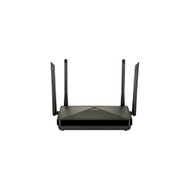
In the contemporary landscape of digital connectivity, hardware selection dictates the overall efficiency of residential and small office workflows. Consumer grade networking equipment often promises comprehensive coverage and high data throughput, yet field performance frequently reveals a gap between marketing claims and operational reality. This evaluation looks into the technical capabilities, structural design, and field reliability of the
Hardware Architecture and Physical Layout
The physical design of the unit reflects a utilitarian approach to consumer electronics. It features a compact chassis designed for desktop placement or shelf integration. The external housing prioritises heat dissipation, incorporating ventilation slots across the perimeter to mitigate thermal throttling during periods of sustained data processing.
Interface Configuration
The rear panel of the unit houses the physical connection infrastructure necessary for localized distribution. It contains a standard DSL port alongside multiple Ethernet interfaces. These Ethernet ports facilitate high speed wired connections for devices requiring minimal latency, such as network attached storage units, desktop workstations, and smart television hardware. The inclusion of an integrated Very High Speed Digital Subscriber Line 2 modem ensures direct compatibility with standard broadband architectures, minimizing the requirement for external bridging hardware.
Visual Diagnostics
The front facing panel utilizes an array of light emitting diode indicators to communicate real time operational status. These visual metrics provide immediate feedback regarding power stability, internet synchronization, local network activity, and active wireless frequencies. For network administrators and remote support technicians, these indicators simplify early stage troubleshooting by quickly identifying whether a connection failure stems from external carrier issues or internal localized faults.
Core Wireless Standards and Spatial Stream Mechanics
The unit is engineered around the eighth generation wireless networking standard, commonly designated as Wireless AC. This framework utilizes a dual band configuration to optimize spectral efficiency and manage data traffic across distinct frequencies.
The Dual Band Framework
To balance localized range with maximum data throughput, the hardware segmentations the wireless environment into two operational bands:
-
The 2.4 Gigahertz Frequency: This band prioritises signal propagation and barrier penetration. Due to its longer wavelength, it travels further through structural walls and solid partitions, making it suitable for low bandwidth applications such as smart home sensors, basic web browsing, and email correspondence.
-
The 5 Gigahertz Frequency: This band targets localized data density. By operating on a shorter wavelength with reduced spectral congestion, it delivers the higher speeds necessary for high definition media streaming, voice over internet protocol communications, and massive file transfers.
By running these frequencies simultaneously, the architecture allows users to segregate high demand traffic from routine operational data, minimizing packet collisions and preserving network stability.
Spectral Capacity Allocation
The AC1200 rating indicates a theoretical aggregate wireless bandwidth capacity of approximately 1200 Megabits per second across both active bands. This total is achieved by combining the maximum bandwidth capabilities of each frequency channel. In practical field tests, these theoretical maximums are rarely sustained due to atmospheric interference, structural degradation, and client device limitations. However, the available bandwidth remains more than sufficient to manage a typical household collection of connected smart devices, personal computers, and entertainment platforms simultaneously.
Deployment and Configuration Methodology
The deployment process for modern gateway hardware must balance sophisticated customisation capabilities with an intuitive setup path for non technical users. The software interface designed for this device accomplishes this balance through a structured web based configuration portal.
Initial Synchronization
Connecting the unit to a standard broadband line is facilitated by an automated configuration assistant. This software tool interrogates the incoming signal to establish the appropriate encapsulation methods and virtual local area network tags required by regional telecommunication infrastructure. For standard installations, this automation removes the necessity of manual point to point protocol credential programming, allowing the gateway to achieve synchronization with minimal user intervention.
Administrative Oversight and Security Protocols
Once the primary connection is established, the internal operating system exposes a comprehensive management panel. Security configurations support standard encryption paradigms, including Wi-Fi Protected Access 2 protocols, which safeguard localized wireless traffic against unauthorized interception.
Advanced parameters allow network managers to implement media access control filtering, establish distinct guest networks with isolated access permissions, and configure demilitarised zones for specific gaming or hosting equipment. The layout of the user interface avoids overly cryptic technical jargon, making advanced settings accessible to general users while retaining the granular controls expected by experienced network administrators.
Traffic Management and Quality of Service
A critical metric of any multi user router is its capacity to distribute finite bandwidth resources without causing latency spikes for sensitive applications. This hardware addresses traffic prioritization through integrated Quality of Service engines.
Dynamic Resource Distribution
When multiple network clients attempt to pull data concurrently, standard unmanaged queues can lead to bufferbloat, causing real time applications like video conferencing or interactive gaming to stutter. The embedded management software allows users to assign specific priority tiers to critical devices or distinct traffic classes. For example, a workstation utilized for remote employment can be given precedence over an entertainment console downloading a massive update file.
Multiple Input Multiple Output Processing
The inclusion of intelligent spatial stream management assists the device in maintaining stable connections to multiple wireless clients simultaneously. Rather than routing data sequentially to one client at a time, the system splits available streams to communicate with multiple devices in parallel. This methodology effectively reduces the idle time experienced by peripheral hardware, maximizing the overall efficiency of the wireless cell and preventing legacy devices from slowing down newer, high speed hardware.
Analytical Field Assessment and Environmental Constraints
To assess this hardware objectively, it is necessary to separate theoretical specifications from practical performance inside real world structures. Over twenty years of network observation confirms that physical architecture remains the primary variable affecting wireless efficacy.
Throughput Realities
While the aggregate bandwidth is rated at 1200 Megabits per second, field deployment demonstrates that individual client speeds will adapt based on proximity to the transmitter. At short range within the same room, the 5 Gigahertz band delivers highly consistent data rates that easily max out standard residential broadband connections. As distance increases and structural barriers come into play, the higher frequency signal degrades predictably, requiring client devices to shift to the more resilient but slower 2.4 Gigahertz band.
Localized Interference Factors
In high density housing situations, such as apartment complexes or suburban estates, the 2.4 Gigahertz band frequently suffers from high noise floors due to competing neighbor networks, Bluetooth peripherals, and household appliances. The dual band capabilities of this device allow users to bypass this environmental noise by shifting primary media tasks to the cleaner 5 Gigahertz spectrum, provided the physical distance remains within the effective range of the shorter wavelength.
Technical Merits and Architectural Limitations
An objective evaluation requires a clear delineation of a product's strengths and its inherent technological boundaries.
Operational Advantages
-
Integrated Design: Combining a VDSL2 modem and an advanced dual band router within a single footprint eliminates component clutter, reduces power outlet utilization, and simplifies system management.
-
Spectral Flexibility: The simultaneous dual band broadcast allows for sensible device segregation, ensuring low priority automation equipment does not interfere with time sensitive corporate traffic.
-
Granular Software Controls: The inclusion of robust access management, firewall customization, and priority routing tools provides adequate flexibility for varying security needs.
Architectural Limitations
-
Absence of Next Generation Standards: The device utilizes the Wireless AC standard rather than the newer Wireless AX protocol. While highly functional for modern internet tiers, it lacks the advanced spectral efficiency upgrades found in newer generation equipment.
-
Physical Port Constraints: Users requiring extensive hardwired networks may find the limited number of built in LAN ports restrictive, necessitating the purchase of an external network switch if multiple wired workstations are deployed.
Final Synthesis and Recommendations
The D-Link AC1200 Modem Router represents a stable, highly mature solution for standard residential and small scale commercial networking requirements. It successfully eliminates the complexity of multi box hardware configurations by integrating modern digital subscriber line modem technology directly alongside a flexible dual band wireless transmitter.
While it lacks the extreme throughput capabilities and advanced spatial multiplexing features of high tier enterprise platforms or newer Wi-Fi 6 ecosystems, its performance profile lines up perfectly with the realistic demands of standard internet plans. The inclusion of logical traffic management utilities, robust encryption frameworks, and a highly scannable visual diagnostic system positions this hardware as a dependable, cost effective foundation for users focused on establishing a balanced and easily maintained local area network.