

You have set up your 3D printer, you have a design ready to go, and then you hit the first real decision that trips up almost every beginner: which filament do you actually use? Walk through the options and you are met with a wall of acronyms. PLA, PETG, ABS, ASA, TPU, PVA, and more, each with its own strengths, quirks, and ideal uses.
The good news is that you do not need a materials science degree to make a sensible choice. Once you understand what each of the main filaments is good at, picking the right one becomes straightforward. This guide explains how to choose 3D printing filament in plain language, so your next print succeeds because you started with the right plastic for the job.
What Filament Actually Is
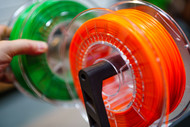
Before comparing the types, it helps to know what filament is. Filament is the plastic thread that feeds into your printer, melts in the nozzle, and is laid down layer by layer to build your object. It comes wound on spools and, for most desktop printers, it is 1.75 mm in diameter.
The important thing to understand is that not all plastics are the same. Some melt at low temperatures and are easy to work with. Others are tougher and more heat resistant but demand more from your printer and your setup. Some are flexible, some are rigid, some are designed to dissolve away. Choosing well is simply a matter of matching the properties of the plastic to what you need your finished object to do, and to what your printer can handle.
Let us go through the main options in the order most people meet them.
PLA: The Best Place to Start
PLA, short for polylactic acid, is the filament almost everyone begins with, and for good reason. It is made from renewable plant sources such as corn starch, it prints at relatively low temperatures, and it is about as forgiving as 3D printing filament gets.
PLA prints beautifully with minimal fuss. It does not warp much as it cools, it sticks to the print bed easily, and it produces crisp, detailed results in a huge range of colours and finishes. It also does not give off strong odours while printing, which makes it pleasant to run in a home or office. If you are learning, or if you simply want a reliable material for models, figurines, prototypes, decorative items, and low-stress everyday prints, PLA is the answer.
Its main limitation is heat. PLA softens at fairly modest temperatures, so it is not the right choice for anything that will sit in a hot car, near a heat source, or out in direct summer sun. It is also relatively rigid and can be brittle, so it is not ideal for parts that need to flex or absorb impact. For the vast majority of prints, though, PLA is where you should start and often where you will happily stay.
PETG: The Practical All-Rounder
Once you have found your feet with PLA, PETG is usually the next material people try, and it fills an extremely useful middle ground.
PETG is the same family of plastic used in drink bottles, and it combines much of the ease of PLA with noticeably better strength and durability. It is more heat resistant than PLA, more flexible so it resists cracking, and it stands up better to moisture and the outdoors. This makes it a great choice for functional parts that need to survive real use, such as brackets, mechanical components, protective housings, and items that will live outside.
The trade-off is that PETG is a little fussier to print than PLA. It prints at higher temperatures and can be more prone to stringing, where fine wisps of plastic are left between parts of the model. These are minor issues that a bit of tuning sorts out, and most modern printers handle PETG comfortably. If you want a single material that balances ease of printing with genuine durability, PETG is hard to beat.
ABS and ASA: For Strength and Heat Resistance
ABS is a name many people already know, because it is the tough plastic used in things like LEGO bricks and car parts. In 3D printing, it is prized for its strength, durability, and resistance to heat, which makes it suitable for demanding functional parts that PLA could not cope with.
The catch is that ABS is more challenging to print. As it cools it tends to shrink and warp, and if the air around it is cool or draughty, layers can split or corners can lift away from the plate. This is exactly why an enclosed printer matters so much for ABS, because a stable, warm chamber keeps conditions consistent and prevents those failures. ABS also releases stronger fumes while printing, so good ventilation or a printer with an air filter is important.
ASA is a close cousin of ABS with very similar strength and printing behaviour, but with much better resistance to sunlight and weathering. If you are making something that will live outdoors and needs to survive UV exposure without going brittle or fading, ASA is often the smarter pick. Both materials reward a capable, enclosed printer and a bit of experience, and they are worth graduating to once you want to make genuinely rugged parts.
TPU: When You Need Flexibility
Every material above is rigid. TPU is the odd one out, because it is flexible and rubbery. If you have ever wanted to print a phone case, a watch strap, a squishy toy, a seal, or a protective bumper, TPU is the material that makes it possible.
TPU bends, stretches, and springs back, and it is tough and resistant to wear. Printing it does require a little patience, because flexible filament needs to be fed slowly and steadily to avoid jams, but the results are things no rigid plastic could ever produce. It is a specialist material rather than an everyday one, but when you need flexibility, nothing else will do.
The Specialist Materials
Beyond the main players, there are materials you will meet less often but which are handy to know about.
PVA is a support material that dissolves in water. On a printer that can handle more than one filament at once, you can print your model in a normal plastic and its support structures in PVA, then simply wash the supports away afterwards to leave a clean finish. It is particularly useful for complex shapes with overhangs that would otherwise be hard to support neatly.
There are also engineering-grade filaments such as nylon and polycarbonate, which offer exceptional strength and heat resistance for serious industrial applications. These are demanding to print and are best left until you are experienced and have a printer built to cope with them, but it is worth knowing they exist as you grow into the hobby.
Matching the Filament to Your Printer
One point ties all of this together: your choice of filament has to suit your printer as well as your project. Higher-performance materials like ABS, ASA, nylon, and polycarbonate need higher nozzle temperatures and, in most cases, an enclosed chamber to print reliably. An open-frame printer will happily run PLA and usually PETG, but it will struggle with materials that warp as they cool.
This is why enclosed machines are so popular with people who want to print functional parts, because they unlock the tougher materials that basic printers cannot handle. When you are choosing filament, always check that it falls within the temperature range and material support your printer is designed for. Pushing a machine beyond what it was built for is a common cause of frustration and failed prints.
Storage matters too. Filament absorbs moisture from the air, and damp filament prints poorly, with rough surfaces, weak layers, and popping sounds as trapped water turns to steam in the nozzle. Keeping your spools sealed in a dry container with a desiccant when they are not in use protects your investment and keeps your prints clean, which is especially important for moisture-sensitive materials like PETG and nylon.
A Simple Way to Decide
If you boil it all down, choosing 3D printing filament comes down to a few simple questions. What does the object need to do, how much heat or stress will it face, does it need to bend, and what can your printer handle?
For learning and everyday prints, reach for PLA. For durable, practical parts that need to hold up to real use, PETG is the sensible all-rounder. For rugged, heat-resistant components, step up to ABS, or choose ASA if it will live outdoors in the sun. For anything that needs to flex, TPU is your material. And as you gain confidence, the specialist filaments are there to explore.
Start with the material that matches your project and your machine, and you will spend far less time troubleshooting and far more time enjoying the results.
Cartridge World stocks a range of quality 3D printing filament alongside its 3D printers, so whether you are starting out with PLA or ready to tackle tougher materials, you can find the right spool for the job. If you are ever unsure which filament suits your printer or your project, the team is happy to help you choose.